How to Serve a Thali Meal at Home Without Losing Your Evening
The thali is a way of organizing a meal, not a performance. Here is how to set it up in a home kitchen so the cook sits down too.
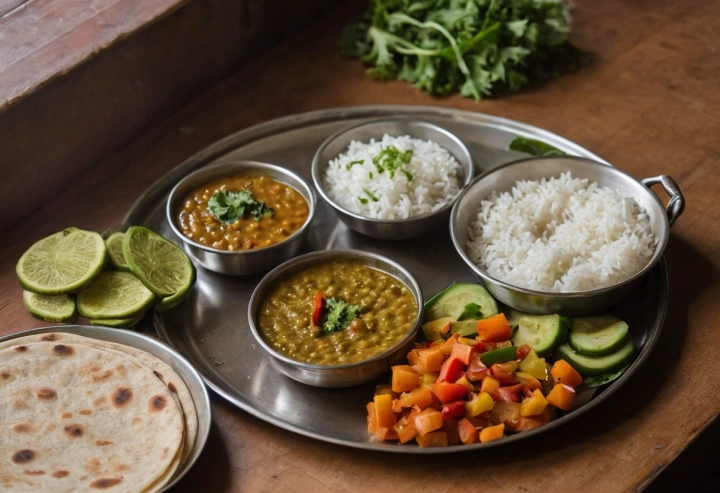
A thali solves a problem every home cook knows: several dishes are ready at once, and everyone needs a fair share of each while the food is still hot. The round plate with its ring of small bowls has worked in Indian homes for generations, and it works just as well on a weeknight in Minnesota as at a festival dinner. This guide covers the plates and bowls worth owning, how to balance the dishes, what order to serve them in, how to handle refills, and how to make guests and children feel at ease rather than tested.
The plate and the bowls
A traditional thali is a wide steel plate with a raised rim, and the rim matters more than it looks. It holds small bowls steady, catches dal that escapes a spoon, and gives the eater a border to work within. Steel is the practical choice for good reasons: it is light, nearly unbreakable, easy to scrub, and it warms slightly when hot food lands on it. If you already own steel plates from a South Asian grocery, use them. If not, any wide dinner plate with a lip will do, and you can add small steel bowls called katoris, which are inexpensive and stack into almost nothing in a cupboard.
Count your bowls before you plan the menu, not after. A comfortable thali holds a few small bowls plus room on the plate itself for rice, bread and anything dry. Wet dishes like dal, kadhi, sambar or a saucy vegetable go in bowls. Dry dishes like a stir-fried sabzi, a salad or papad go straight on the plate. Pickles and chutneys need only a smear, so they can share space near the rim. If you are short on bowls, a couple of small ramekins or even sturdy tea cups stand in fine. Nobody at the table minds mismatched vessels; they mind cold food.
Balancing the dishes
A good thali is built on contrast, not abundance. Think in categories: something grain based, something lentil or legume based, one or two vegetables, something raw or pickled for sharpness, and something cooling if the meal runs spicy. Rice or roti covers the grain. Dal, chana or rajma covers the lentil. A dry sabzi and perhaps a wet one cover the vegetables. A spoon of achaar, a quick onion salad or a chutney brings the sharp note, and raita or plain yogurt cools things down. Sweet is optional at an everyday meal and welcome at a celebration, where a small bowl of kheer or a piece of halwa closes the circle.
Texture and flavor should argue with each other a little. If the dal is soft and mild, let a vegetable carry crunch and mustard seeds. If one dish is rich with ghee or coconut, keep another lean and peppery. Planning ahead pays off here: our guide to planning a home menu for the week with Indian dishes at its heart shows how one big pot of dal can anchor several different thalis across the week, so the balance comes from rotating the small dishes rather than cooking everything fresh each night.
For a household that cooks with high heat and whole spices, get the kitchen air moving before the tadka goes in. Our piece on ventilation for cooking with spices covers why a hood that vents outside makes the evening pleasanter, especially when guests sit near the kitchen.
Serving order and the geography of the plate
There is a quiet logic to how a thali is filled, and following it keeps the meal tidy. Start with the base: a mound of rice on one side of the plate, or the first roti laid on the empty plate if bread is the anchor. Then place the filled bowls around the upper edge, wet dishes together so drips stay in one zone. Salt, pickle and chutney take the top corner, a small territory the eater dips into all meal long. Papad or a crisp element goes on last so it stays dry until it is broken.
If you are plating for guests, fill the bowls in the kitchen and carry the assembled thali out at once. It looks generous, it saves trips, and everyone starts eating together. For family meals, put the bowls and pots on the table and let people serve themselves; choosing your own portions is part of the pleasure. Bread is the exception either way. Rotis and puris fade fast, so bring them out in small batches wrapped in a cloth rather than stacking the whole pile on every plate at the start.
Refills without running a shuttle service
The generosity of a thali meal lives in the refill, but the cook should not spend the evening ferrying pots. Set the table for self-service from the beginning:
- Keep the dal and rice in their cooking pots on trivets at the table, lids on between servings.
- Put a serving spoon in every dish so nobody has to ask or reuse a personal spoon.
- Bring bread in a cloth-lined basket and refresh it once midway through the meal rather than continuously.
- Keep water within reach of every seat, since spiced food makes people thirsty and standing up breaks the flow.
When the table is crowded or the group is large, the layout of the room does half this work for you. We have written about designing a dining room for large family meals and about tables that stretch for festive feasts, including floor seating for families who prefer it. Either piece pairs naturally with thali nights, because a round plate needs elbow room and a reachable center.
A gentle word on offering seconds: ask once, warmly, and accept the first no. In many households pressing food on a guest is a language of affection, but some guests genuinely eat modestly or are pacing themselves. An open pot on the table lets enthusiasm speak without anyone being cornered.
Hands, cutlery and honest comfort
Eating with the hand is the traditional way across much of India, and it is a skill with real technique behind it: fingertips gather rice and dal, the thumb pushes the bite forward, and the palm stays clean. It also changes the experience of the food, since touch tells you the temperature before your mouth does. If your family eats this way, keep a bowl of warm water and a towel near the table for washing before and after, and set a finger bowl at each place for longer meals.
Cutlery is not a lesser option. Plenty of people who grew up with thalis use a spoon at work lunches or on days their hands are tired, and guests may simply be unfamiliar with the method. Set a spoon at every place by default and let each person choose. Say nothing about the choice either way. The fastest way to make a guest uncomfortable is to turn dinner into a lesson they did not request. If someone asks how to eat with their hand, show them gladly; otherwise let the meal teach quietly by example.
Children get their own adjustments. A smaller plate with less on it feels finishable rather than daunting, and a child who assembles their own tiny bites of rice, dal and sabzi is learning the grammar of the meal. Keep the spicy elements and whole chilies off the child’s plate but present on the table, so the same dinner serves everyone without a separate production. Cutlery for small hands is fine forever if that is what they prefer; comfort at the table matters more than method, and habits often shift on their own as children watch adults eat.
Start with one weeknight thali
The next step is small and concrete: pick one evening this week and build a thali from what you already cook. A pot of dal, plain rice, one dry vegetable, yogurt and a jar of pickle is a complete and honorable thali. Set out your widest plates, borrow small bowls for the wet dishes, put the pots on the table with serving spoons, and sit down with everyone else. Notice what ran out first and what nobody touched, and let that shape the next one. The form is forgiving by design; it meets your household where it is.
Filed in Family Table. Read the editorial policy or send a correction.