Lentils, Rice and Flour in the Home Pantry
Most Indian home cooking rests on three dry staples. Here is how to choose them, store them well, and keep the shelf turning over instead of going stale.
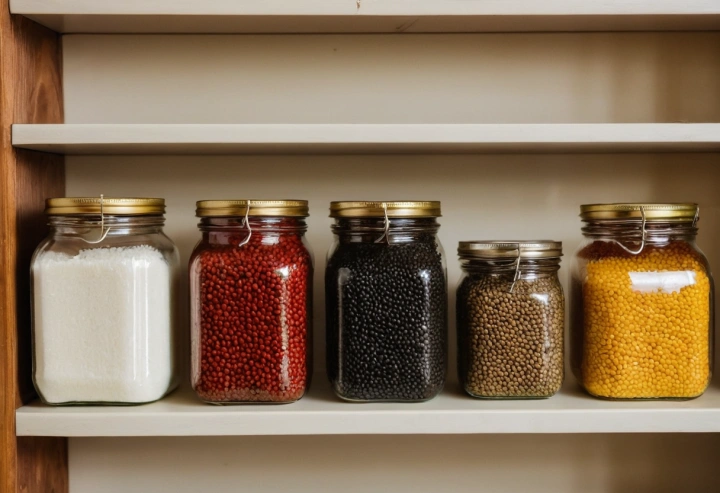
Dal, rice and flour carry most of the weight in an Indian home kitchen, and they are also the three things likeliest to go stale, clump or breed weevils in a forgotten corner. This guide covers which kinds earn shelf space, how to store them so they still taste fresh, and how to keep the stock moving so nothing sits long enough to turn.
The dals worth keeping
A workable dal shelf is small. Split and skinned pulses cook quickly in a plain pot, need no soaking, and break down into the soft, spoonable texture that everyday dals want. Toor dal, the split pigeon pea, is the backbone of many southern and western preparations, nutty and slightly sweet. Masoor, the red split lentil, collapses fastest of all and suits a weeknight pot started late. Moong dal, split yellow mung, is the gentlest and easiest to digest, good for a thin khichdi or a simple breakfast porridge. Chana dal, split baby chickpeas, holds its shape and takes longer, useful where you want distinct grains rather than a purée.
Whole beans belong on the shelf too, just in smaller number. Whole green mung, whole urad and kala chana all need a long soak and a longer cook, and they reward it with body and depth. Rajma and whole chickpeas are weekend projects rather than Tuesday ones. Urad has a particular role in batters and in slow, buttery dals, and a small jar goes far.
Buy dals from a place with turnover. Old split lentils harden and refuse to soften however long you boil them, and no amount of salt or soda fully rescues them. Look for even color, few broken fragments and no dusty residue at the bottom of the bag. If a dal has sat in your cupboard since before last winter and still cooks up firm, the dal is the problem, not your method.
Rice for everyday and rice for feasts
Two rices cover almost everything. Keep a long-grain aromatic rice, basmati or a regional equivalent, for pulao, biryani and any meal where the rice should be noticed. Keep a plainer, shorter or medium grain for daily eating with dal and sabzi, where the rice is a base rather than a feature. Sona masoori and similar varieties are common for this, and they cost less, which matters when rice appears at most meals.
Aged basmati behaves differently from new rice. Older grain absorbs more water, elongates more and stays separate, which is why cooks watch for age when it is labeled. New crop rice needs less water and turns sticky if you treat it like aged grain. When a bag cooks up unexpectedly wet, reduce the water next time rather than blaming the pot.
Rinse until the water runs nearly clear, then let the grains drain. For a feast rice, a short soak before cooking helps the grains lengthen without breaking. For everyday rice, rinsing and draining is enough. A third rice, something like idli rice or a parboiled variety, earns space only if you grind batters or make those dishes regularly.
Atta and the other flours
Atta is a whole wheat flour milled fine for chapati and roti, and because it keeps the bran and germ, it carries oil that eventually turns rancid. That is the central fact about storing it. Refined all-purpose flour keeps far longer but does not make the same bread. Buy atta in amounts your household finishes within a few weeks, not the largest sack available because the unit price looks better.
Beyond atta, a few flours do specific jobs:
- Besan, ground from chana, for batters, pakoras, kadhi and sweets.
- Rice flour for crispness in batters and for certain flatbreads and steamed cakes.
- Ragi or bajra flour for winter flatbreads, bought fresh and used quickly since both turn bitter fast.
- Corn flour or a little semolina for dusting and texture rather than as a staple.
Besan clumps and absorbs odors readily, so give it its own sealed jar, away from strong spices. Treat millet flours almost like fresh goods. If a flour smells faintly of crayons or old nuts, it has gone, and no amount of kneading brings it back.
Airtight storage that actually works
The bags these staples arrive in are transport packaging, not storage. Decant into glass jars with gasket lids, food-grade plastic containers with locking rims, or steel tins with tight covers. Glass lets you see quantity and condition at a glance, which quietly encourages rotation. Steel protects flour from light better.
Size the container to the purchase. A jar half full of atta holds a lot of air, and air oxidizes the flour. Several medium jars beat one enormous bin. Keep the jars off the floor, away from the stove and out of direct sun, since heat and light both shorten life. A cool interior cupboard on an outside wall usually beats the cabinet above the range.
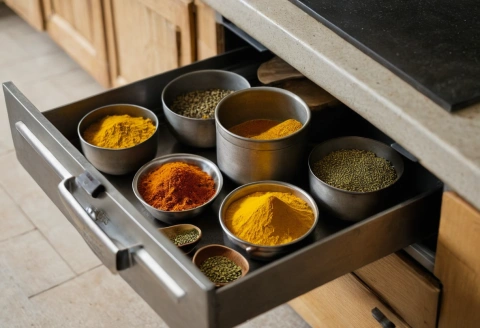
Label every jar with the contents and the month it was filled. A strip of masking tape and a marker is sufficient. Where a spice shelf benefits from small tins and quick access, as covered in organising a spice drawer or a masala dabba, staples want the opposite: bigger vessels, fewer openings, less handling.
Pests, and what to do about them
Pantry beetles and moth larvae usually arrive inside the grain rather than crawling in from your kitchen. Eggs are already present in some bags, and warmth lets them hatch. Freezing a newly bought bag of rice, dal or flour for several days kills whatever is there before it starts. Let the container come back to room temperature before opening so condensation does not form inside.
After that, sealed containers stop spread. One infested bag left open can move through an entire shelf. Check jars now and then for webbing, clumping, small dark specks or moths resting on the lid. If one jar is affected, empty it outdoors, wash and dry it thoroughly, and inspect its neighbors before returning anything to the shelf. Bay leaves and cloves are traditional additions and may discourage insects at the margins, but they do not substitute for a proper seal or for freezing suspect grain.
Flour that has hosted larvae should go. Sifting removes visible insects but not the reason they were there.
Rotation, and the next step
Use a simple rule: new purchases go behind or below the old stock, and the oldest jar gets cooked first. It sounds obvious and fails constantly, because the newest bag is the one nearest the door. Filling a working jar from a larger reserve solves much of this, since the reserve stays closed and the working jar empties visibly.
Once a season, pull everything out. Wipe the shelf, check dates, smell the flours, and cook whatever is closest to turning. Plan a week around what needs using, which pairs naturally with planning a home menu with Indian dishes at its heart. A pot of dal made from the jar that has waited longest beats any storage trick.
Start today with one shelf. Take everything off it, discard what smells wrong, decant the rest into sealed jars, write the month on each lid, and put the oldest at the front. Then write down what you ran out of last week. That short list, not a shopping catalog, is your real pantry.
Filed in Spice Pantry. Read the editorial policy or send a correction.