Venting Spice Smoke and High Heat Out of a Home Kitchen
Tadka smoke and hard searing ask different things of a kitchen: a hood that actually moves air outdoors, and enough calm around the hob for that air to be caught. Here is how to get both.
Smoke from a hot tadka behaves differently from steam off a pot of rice. It is fine, oily and fast, and it climbs past your face before most hoods have finished spinning up. Getting it out of the house takes three things working together: a hood that vents outdoors, a shape and position that catch the plume, and air moving calmly enough around the hob for any of that to work. This guide covers each, plus the stove habits and filter cleaning that keep the whole system honest.
A hood that vents outside, not back into the room
Hoods come in two basic types. One pulls air through a grease filter and pushes it out of the house through ductwork. The other, often called recirculating or ductless, pulls air through grease filters and a charcoal filter, then blows it back into the kitchen. For heavy spice cooking and high-heat searing, the difference is decisive. A recirculating hood traps some grease, but smoke particles, steam and cooking odors go straight back into the room. If your kitchen smells like last night’s dinner every morning, this is usually why.
If you are choosing or replacing a hood, plan for real ductwork to an exterior wall or the roof. Keep the run as short and straight as you can; every elbow slows the air, and flexible ribbed ducting slows it more than smooth rigid pipe. A duct that narrows partway along its run quietly strangles the fan no matter what the box promised. When a renovation is planned, decide the duct route early, alongside where the hob will sit, because moving either one later is expensive. Our guide to planning a kitchen renovation around how you actually cook walks through listing your cooking habits first so decisions like this land in the right order.
If ducting truly is not possible, treat a recirculating hood as a grease catcher, not a smoke solution, and lean harder on the window and pan habits below.
Capture area and placement do more than fan power
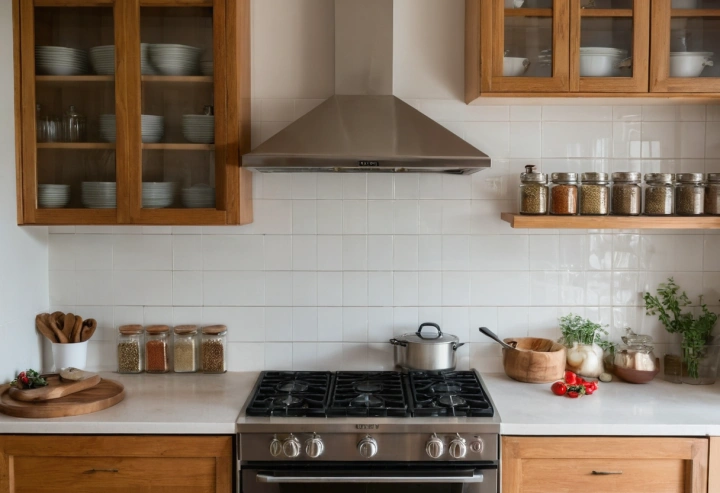
People shop for hoods by airflow numbers, but capture comes first. Cooking smoke rises in a widening cone, and the hood has to be wide and deep enough to hold that cone until the fan takes it. A shallow strip hood tucked under a cabinet often misses the front burners entirely, exactly where a small tadka pan tends to live. A deeper canopy that reaches over the front of the hob, or an island hood wider than the cooking surface, captures far more with a gentler fan.
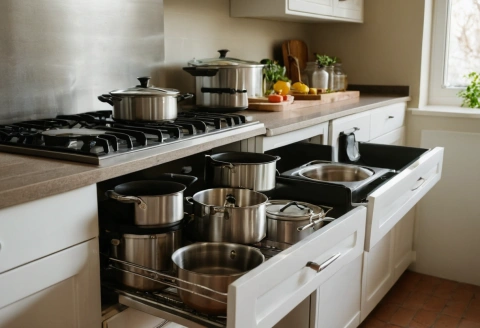
Height matters too. Mount the hood too high and the plume drifts sideways into the room before it arrives; mount it too low and you knock your head and crowd tall stockpots. Follow the manufacturer’s stated range, and within it favor the lower end if the cooks in the house are not tall. If you routinely cook with big pressure cookers and deep pots, check clearance with your tallest pot in place before fixing the height. Where those pots live the rest of the time is its own puzzle, covered in our piece on storage for big pots, pans and pressure cookers.
One more placement note: a hood against a wall captures better than the same hood over an island, because the wall blocks side drafts and channels the plume. Island hoods need more width and more airflow to do the same job.
Tempering spices without smoking up the house
Tadka is brief and intense: hot fat, whole spices, sometimes dried chilies and curry leaves that spit and smoke within moments. You cannot avoid the smoke, but you can aim it.
- Run the hood for a minute or so before the fat goes in, so air is already moving toward the filters when the smoke arrives.
- Use a small, deep-sided pan rather than a wide skillet; the walls corral the plume upward instead of letting it spill sideways.
- Work on a front burner if your hood barely covers it, or a back burner under a proper canopy, whichever sits fully under the capture area.
- Keep a lid within reach. If chilies start to scorch, sliding the lid on for a few breaths traps the worst of the smoke while the hood catches up.
- Have the dal or vegetables ready beside the pan so the hot tadka can be poured and the pan pulled off the heat quickly, rather than smoking on the burner while you search for a spoon.
After the tempering is done, leave the hood running for several minutes. The visible smoke clears fast, but the fine oily aerosol lingers, and a few extra minutes of extraction keeps it from settling on cabinets, where it turns sticky over months.
Windows and cross draughts: help the hood, don’t fight it
A hood can only exhaust air that the house replaces. In a tightly sealed home, especially in a Minnesota winter with everything shut, a strong hood may struggle simply because no fresh air can get in. Cracking a window somewhere in the house gives that air a way back in.
Where you crack it matters. A window right next to the hob, or two open windows creating a breeze across the stove, will blow the rising smoke sideways out of the hood’s reach and into the room. The fix is simple: open a window across the room or in an adjoining space, not beside the burners, so replacement air arrives gently. Ceiling fans pointed at the cooking area cause the same problem; aim them away or switch them off while searing.
In mild weather, a door open at the far end of the kitchen and a window cracked near the cooking zone can set up a soft, steady flow that carries stray odors out. Test it with the smoke from your next tadka: if the plume bends toward the hood, the air is on your side. If it wanders toward the hallway, close something and try again.
Cleaning grease filters so the hood keeps pulling
Grease filters are usually aluminum or stainless mesh, and they load up faster in a kitchen that fries spices regularly than the manufacturer’s schedule assumes. A clogged mesh filter chokes airflow and drips; you may hear the hood strain or smell old grease when it warms.
Most metal mesh filters pop out with a latch and are dishwasher safe, though hand soaking works well: a sink of very hot water with dish soap and a scoop of baking soda, left for a good soak, then a soft brush along the mesh and a rinse. Let them dry fully before they go back. Check them monthly if you cook Indian food most days; wash them whenever the mesh looks dull and filmed rather than bright. Wipe the underside of the canopy and the edges of the fan housing at the same time, since grease collects there too.
Charcoal filters in recirculating hoods cannot be washed; they saturate and must be swapped periodically, another reason to prefer real ducting if you have the choice. Once or twice a year, glance at the exterior vent flap outside to confirm it opens freely and has not been glued shut by grease or blocked by a bird’s nest.
Your next step at the stove
Tonight, before you heat the fat for tadka, do a quick audit. Find out whether your hood ducts outside or recirculates; the tell is a vent grille on the hood’s front or top that blows air back at you. Switch the hood on early, watch which way the spice smoke travels, and pull the grease filters for a look. Those three observations tell you whether you need a cleaning, a habit change, or a real conversation about ductwork. Fix the cheap things first: most kitchens get noticeably clearer from an early-start hood, a lidded tadka pan and clean mesh alone.
Filed in Kitchens. Read the editorial policy or send a correction.