How to Organize a Masala Dabba and Spice Drawer
A spice drawer works when it matches the order you cook in. Here is how to set up a round tin for daily spices, store the rest, and keep both fresh.
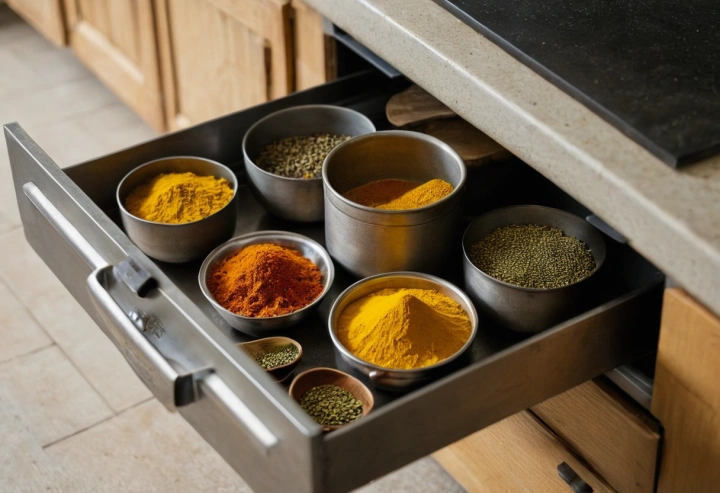
A spice drawer goes wrong in a predictable way. Jars multiply, half are duplicates, the cumin hides behind the cinnamon, and dinner stalls while someone hunts for a lid. The fix is not more containers. It is deciding which spices earn a place within arm’s reach, storing the rest where they will keep, and arranging everything in the order your hands move when you cook.
Start with what you actually cook
Before buying anything, pull every jar out and set it on the counter. Group them by how often you use them, not by alphabet or size. Most Indian home cooking runs on a small core: cumin, mustard seeds, turmeric, chili powder, coriander, garam masala, and whatever whole spices your family’s usual dishes call for. That core belongs in the daily tin. Cardamom pods, cloves, bay leaves, fennel, and the occasional specialty blend can live a step away, in a drawer or on a shelf.
This sorting also exposes the dead weight. A jar bought for one recipe years ago has probably lost its smell. If it smells like dust, compost it and free the space. Spices are not heirlooms.
The round tin and its logic
The masala dabba, a round steel tin with a fitted lid and small bowls inside, solves several problems at once. Everything you need for an everyday tadka sits in one container. The lid keeps light out. The bowls lift out for refilling and washing. And because it is compact, it can sit close to where you cook without cluttering the counter.
The arrangement inside should follow your cooking sequence. When you heat oil and reach for mustard seeds first, put them where your hand lands first. Cumin next, then asafoetida, then turmeric and chili toward the middle of cooking. There is no universal correct layout; the right one is the one your fingers learn without looking. Cooks who make dal most nights might center turmeric. Cooks who temper with curry leaves and urad dal alongside the spices should keep those dry additions in the drawer just beneath, since fresh leaves belong in the fridge.
A few habits keep the tin working:
- Use the small spoon that comes with the tin, or a dedicated dry teaspoon, never a wet one.
- Return each bowl to its spot so the layout stays muscle memory.
- Wipe the rim and lid now and then; spilled turmeric stains and old oil turns sticky.
- Keep the lid closed between uses, even mid-cooking, to keep steam out.
Whole and ground, stored differently
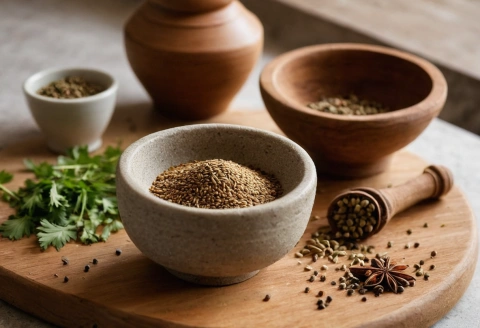
Whole spices and ground spices age at very different speeds, and storage should reflect that. Whole cumin, coriander seed, and mustard hold their flavor for a long stretch when kept dry and dark. Ground spices lose their edge much sooner, because grinding exposes far more surface to air. The practical answer is to keep whole spices as your reserve and grind small amounts as needed, or buy ground spices in modest quantities you will finish within a few months. Toasting and grinding at home takes only a few minutes with a dry pan and a small grinder, and the difference in a finished dish is real. We cover the timing and trade-offs in whole versus ground spices.
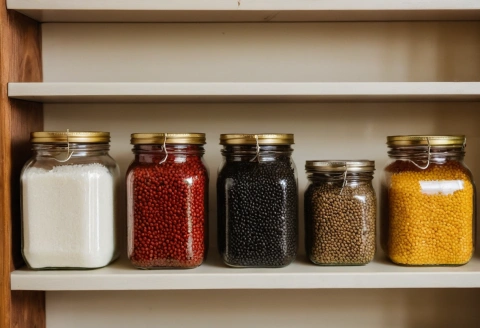
For the reserve jars, airtight glass or steel containers beat bags folded over with a clip. Label every jar with the name and, if you like, the season you bought it, written on tape that peels off cleanly. Labels matter more than they sound: ground coriander and ground cumin look nearly identical in dim evening light, and a mislabeled jar quietly ruins a dish. Include blends too, with a note of what is in them, so a jar of homemade masala never becomes a mystery.
Light, heat, and the wrong shelf
The most common storage mistake is the rack directly above or beside the stove. It looks convenient and photographs well, but heat and light fade spices fastest, faster than age alone. Steam from boiling pots is a third enemy; moisture cakes ground spices and can invite mold.
A drawer is close to ideal: dark, dry, and stable in temperature. A closed cabinet away from the oven and dishwasher works nearly as well. The daily tin can sit on the counter if it lives a hand’s width or more from the burner and stays lidded, but a drawer near the stove beats a shelf above it. If your kitchen is small and options are limited, prioritize darkness and distance from steam over convenience. Walking two steps for the cumin costs nothing; replacing flat-tasting spices every few weeks costs plenty.
Refilling without the clutter
The system that keeps a spice drawer sane has two tiers: small working amounts in the tin, larger reserve jars in the drawer, and refills flowing from reserve to tin. When a bowl runs low, top it up from the jar before you start cooking, not in the middle of a sputtering tadka. When a reserve jar runs low, that goes on the shopping list, wherever you keep it.
Resist buying a second jar of something already open. Two half-empty jars of turmeric age twice as fast as one full one being steadily used. Buy amounts you will realistically finish, especially for ground spices and delicate blends. Bulk buying makes sense for whole spices you grind yourself and for staples like rice and dal that turn over quickly; the same logic that governs lentils, rice, and flour in the pantry applies here, on a smaller scale.
Once or twice a year, empty the tin completely, wash and dry the bowls thoroughly, and check the reserve jars by smell. Anything that has gone quiet gets replaced. This small ritual takes less time than one episode of television and resets the whole system.
Set yours up this week
The next step is concrete: tonight, gather every spice you own onto the counter and sort it into daily, occasional, and gone. Load the daily group into the round tin in the order you cook, label the reserve jars, and give them a dark drawer away from the stove. Then cook one familiar dish and notice where your hand hesitates. Adjust the layout until it stops hesitating. A spice setup is finished not when it looks tidy, but when dinner gets easier.
Filed in Spice Pantry. Read the editorial policy or send a correction.