Cooking for a Family Crowd Without Losing the Stove
A practical plan for feeding a houseful: which dishes scale easily, what can be made days ahead, and how to keep everything hot until people sit down.
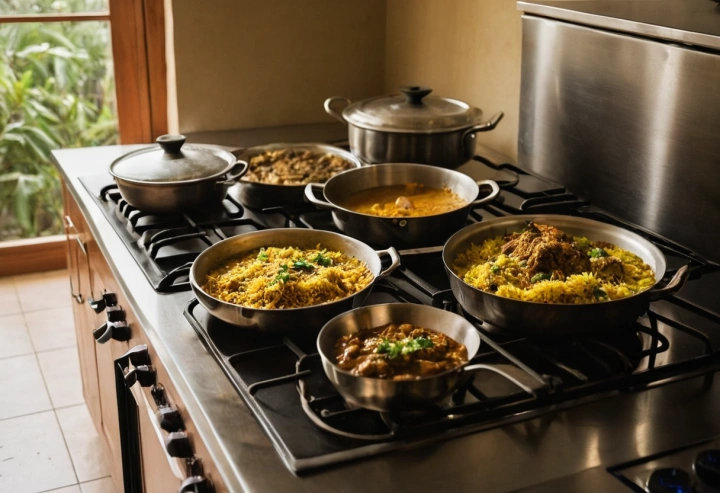
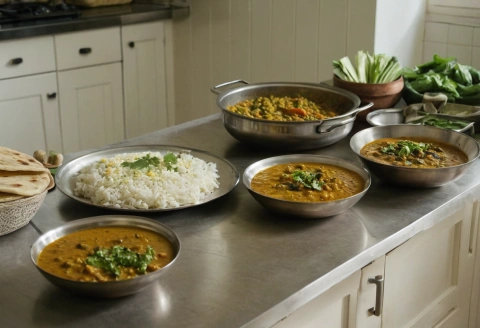
Feeding a houseful is mostly a scheduling problem. The cooking itself is familiar: dal, a vegetable dish, something with gravy, rice, bread. What breaks down is space and timing, four burners and one oven against a menu that assumed unlimited heat. Here is how to choose dishes that scale without trouble, move work to earlier days, borrow the pots you actually need, and set out food so it stays hot and safe while everyone finds a seat.
Choose dishes that scale, not dishes that multiply
Some recipes get bigger gracefully. Lentils, bean stews, slow-cooked greens, braised meat, yogurt-based curries finished off the heat: these live in one pot, tolerate a longer simmer, and taste better after a rest. Rice dishes layered in a heavy pot also scale, as long as the pot is wide enough for steam to move through the whole thing.
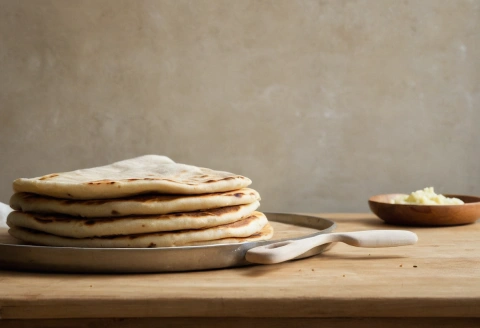
Other recipes fight you. Anything fried in batches turns into an hour at the stove while guests wait. Flatbreads are worse: each one needs a hot pan and a person standing there. If bread matters to the meal, make a modest stack ahead and keep it wrapped in cloth inside a covered dish, then buy or borrow help for the rest rather than promising fresh bread for everyone. Our notes on flatbreads at home cover the resting and rolling that let you work ahead without tough results.
A useful rule: build the meal around two large pots and one tray from the oven, then add raw and cold things that need no heat. Sliced onion with lemon and salt, a yogurt raita, cucumber, chutney, pickles. These carry as much of the meal as the cooked dishes and cost no burner time.
Cook ahead in layers
Split the work by what improves with waiting and what does not.
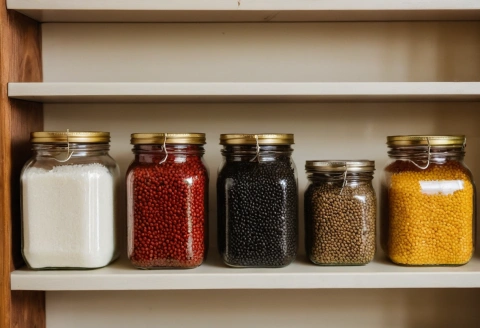
Days before: grind or measure spices, mix a masala base of onion, ginger and garlic cooked down until the oil separates, and freeze it in portions. Cook dried beans and cool them in their liquid. Make chutneys that keep. Toast and crush whole spices for the finishing tempering.
The day before: cook the dal or the braise fully, then cool it fast in shallow containers and refrigerate. Undercook it slightly if you plan to reheat it hard the next day. Wash and cut sturdy vegetables. Marinate anything that needs it. Set the table, count plates and spoons, and clear the counters.
The day itself: rice, the tempering poured over the dal, the quick vegetable dish, frying if you insisted on frying, and reheating. That is a manageable list.
One caution about scaling: spices do not multiply evenly. Double the lentils and you rarely want double the chili or double the salt. Start with less than a straight multiplication, taste near the end, and correct. Whole spices bloomed in fat behave more predictably than ground ones stirred into a large volume of liquid.
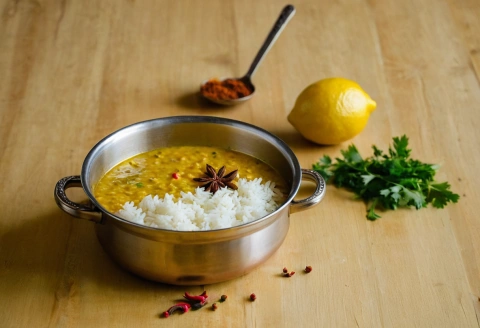
For the base of the meal, a simple dal method is worth having in your hands before you cook for a crowd. Once rinsing, simmering and tempering are automatic, you can make a very large pot without measuring anything but the water.
Borrow the right pots
Most home kitchens have plenty of small pans and nothing wide enough for a crowd. Ask around a few days early, and ask specifically:
- A heavy stockpot with a tight lid for dal, beans or a large braise.
- A wide, heavy pot with a lid for layered rice, wide enough that the grains sit in an even layer rather than a deep mound.
- A large flat-bottomed kadai or sauté pan for the masala base and any frying.
- Deep serving bowls with ladles, plus a couple of extra trivets.
Test borrowed pots on your own burners before the day. A wide pot on a small electric coil heats unevenly and scorches the center of a rice dish. If that is your situation, cook the rice in a narrower pot and finish it in the oven, or move the whole thing to a low oven once it comes to a boil. Check lids too. A loose lid loses the steam that a dum-style finish depends on; a sheet of foil under the lid fixes it.
Count serving utensils separately from cooking utensils. Every dish needs its own spoon, and the spoon that lives in the dal pot should not be the one you stir raw marinade with.
Plan the oven and the stove on paper
Write the last two hours out, burner by burner. It sounds fussy and takes five minutes, and it prevents the moment when three dishes all need high heat at once.
A workable pattern: rice takes one burner for its boil, then moves to the lowest heat or into a warm oven to finish. The dal or braise reheats on a second burner over gentle heat, stirred so the bottom does not catch. The quick vegetable dish gets the third burner near the end. The fourth stays free for the tempering, which happens last and takes only a minute or two.
The oven does the quiet work. Use it to hold casseroles covered, to roast a tray of vegetables or paneer while the stove is busy, and to keep bread warm wrapped in foil and cloth. Give the oven one job at a time and note the order: roasting needs real heat, holding needs very little, and those cannot happen together.
If you cook with high heat and whole spices, run the hood that vents outside from the first sizzle rather than after the smoke arrives. A crowded room full of people is not the place to discover your extractor recirculates. Our piece on ventilation for spice cooking explains what to check.
Serve buffet style and keep it hot safely
Set the food out in the order people will eat: plates first, then rice, then the wet dishes, then bread, then the cold and raw things, then spoons and napkins at the end. Put the drinks and the dessert somewhere else entirely so the line does not stall.
Keep the line short and the dishes deep. A deep bowl holds heat far better than a wide shallow platter, and a lid left ajar between servings does more than any amount of fussing. For longer waits, set a covered dish over a pan of barely simmering water, or use a low oven with the food covered. Warm is not the goal. Hot food should stay properly hot, steaming when the lid comes off, not merely pleasant. Cold things, the yogurt and the salads, go out just before eating and return to the fridge afterward rather than sitting through a long afternoon.
Leftovers matter more with a crowd because there are more of them. Cool cooked food in shallow containers, uncovered until the steam stops, then refrigerate within a couple of hours of cooking rather than leaving the big pot on the stove to deal with later. Reheat only what you will eat, and bring gravies to a full bubbling simmer throughout. Rice deserves particular care: cool it quickly, spread thin, and refrigerate promptly.
Your next step
Pick the date and write the menu as two big pots, one oven tray and three cold dishes. Then walk to your stove and assign each item a burner or a shelf, and write down which pot it needs. Whatever you do not own goes on a borrowing list today, while there is still time to ask. Everything after that is ordinary cooking, done in a sensible order.
Filed in Cooking at Home. Read the editorial policy or send a correction.