Setting Up an Outdoor Cooking Corner That Works for Indian Food
A grill or clay oven outside can take on the high-heat work that fills your kitchen with smoke. Here is how to set up a corner that is safe, comfortable and easy to clean.
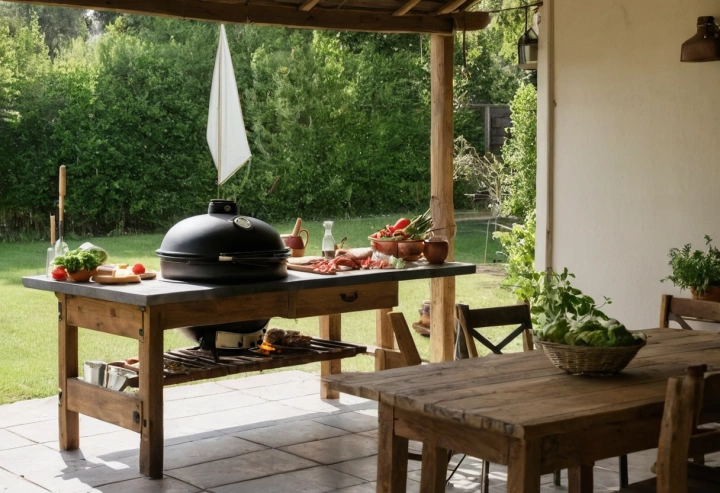
An outdoor cooking corner solves a real problem for anyone who cooks Indian food at home: the high heat, the splatter of oil when mustard seeds hit a hot pan, the smoke from charring peppers or searing marinated meat. Moving some of that work outside keeps your kitchen air cleaner and gives you room to cook over live fire without setting off every alarm in the house. The setup need not be elaborate. A reliable heat source, a surface to work on, some thought about wind and shade, and a plan for cleanup will carry you through most of what you want to cook.
Choosing Your Cooker
A charcoal grill handles skewers, flatbreads laid directly on the grate, whole fish wrapped in banana leaf, and vegetables charred for a smoky bharta. Look for one with adjustable grate height or at least two zones so you can move food between direct and indirect heat. A kettle-style grill with a lid gives you more control over temperature and lets you trap smoke for deeper flavor.
A clay oven style cooker, whether a traditional tandoor shape or a simpler drum design, reaches the intense radiant heat that makes naan puff and blister in seconds and gives tandoori chicken its characteristic crust. These cookers hold heat for a long time once the walls are saturated, so light the fire well ahead of when you want to cook. They are heavier and less portable than a grill, so give them a permanent spot on a level, non-combustible surface.
Either way, avoid placing the cooker under low branches, against a wooden fence, or beneath an overhang that traps heat. Give it open air on all sides and a clear path between the cooker and your prep area.
The Prep Table and Work Zone
You need a surface close enough to the fire that you can turn skewers and slide plates without taking more than a step or two. A simple wooden table, a stainless steel cart, or even a pair of sawhorses with a plywood top will do as long as it is stable and roughly at elbow height. Keep it out of the direct heat zone so marinades do not warm up and raw juices do not bake onto the surface.
Arrange your work zone so raw items stay on one side and cooked items land on the other. A small shelf or tray underneath holds tongs, a basting brush, oil, and a stack of plates. If you are rolling dough for flatbreads or threading vegetables onto skewers, get that prep done before the fire is at full heat, not while you are also managing flames.
For planning what goes on the grill alongside the rest of your week’s cooking, our guide to planning a home menu with Indian dishes at its heart can help you think through which dishes benefit from outdoor fire and which stay on the stovetop.
Shade, Wind and Comfort
Cooking over coals in direct summer sun is punishing. A shade sail, a pergola with climbing vines, or even a large umbrella positioned to block afternoon sun from the cook marks the difference between enjoying the process and wanting to escape it. Keep any fabric shade well above and away from the cooker itself, far enough that rising heat cannot scorch or ignite it.
Wind matters more than most people expect. A steady breeze feeds coals and can push sparks toward dry grass or a neighbor’s laundry. Position the cooker so the prevailing wind carries smoke away from your seating area and away from open windows, yours and theirs. A simple windbreak on one side, a fence panel or a row of potted plants, can calm gusts without blocking airflow entirely.
If your outdoor space connects to the kitchen through wide doors or a covered passage, consider how smoke might drift inside when those doors are open. Our article on indoor-outdoor living around the kitchen explores how to manage that transition in warm climates, and the same principles apply to keeping cooking smoke outside where it belongs.
Fire Safety Basics
Live fire outdoors is manageable but not casual. A few habits keep it safe:
- Keep a bucket of sand, a fire extinguisher rated for grease fires, or a garden hose within reach whenever the cooker is lit.
- Never move a grill or clay oven while coals are hot.
- Keep children and pets behind a clear boundary; a change in paving or a low rail works as a visual cue.
- Clear dry leaves, paper and anything flammable from a generous radius around the cooker before you light it.
If fat drips and causes a flare-up, move the food to a cooler zone rather than dousing the fire with water, which sends ash onto your food and can crack a clay cooker. Close the lid or lay a sheet of foil loosely over the grate to starve the flame of oxygen.
Smoke and Neighbors
Charcoal and wood produce real smoke, especially in the first minutes after lighting and when fat hits coals. Be considerate about timing. Firing up late at night when neighbors have windows open is different from cooking in the early evening when most people are still inside with doors closed. Use seasoned hardwood or lump charcoal rather than softwood or briquettes with heavy binders, which produce more acrid smoke.
Once the coals are fully ashed over and glowing, smoke drops sharply. Avoid adding wet wood chips for smoking unless you genuinely want that flavor, because they billow heavily before they catch. If a neighbor has mentioned smoke before, a brief conversation about your cooking schedule does more than any equipment fix.
Cleaning Up Without Dread
Let the fire die naturally. Spreading coals out speeds cooling, but do not dump water on a clay oven, which can crack from thermal shock. Once everything is cool to the touch, scoop ash into a metal container with a lid and store it away from anything combustible until you dispose of it days later. Hidden embers can stay live longer than you expect.
Wipe the prep table while it is still slightly warm from ambient heat; marinade residue comes off more easily before it dries hard. Scrape grill grates with a stiff brush while they are warm, then oil them lightly to prevent rust. Clay oven interiors are largely self-cleaning because the next firing burns off residue, but check the floor for ash buildup every few uses so airflow stays clear.
Cover the cooker if rain is coming, but only after it has cooled completely. A cover put on too soon can warp metal or trap moisture that speeds rust.
Start Small and Build From There
Pick a spot this week. Set your grill or cooker on a level surface, put a table beside it, and cook one meal outside: skewers of paneer and peppers, or a few flatbreads if you have a clay oven. Notice where the smoke goes, where the sun hits, and whether your work surface sits at the right height. Adjust from there. The corner does not need to be finished before it is useful. It needs a fire, a place to set things down, and your attention to safety. Everything else follows with use.
Filed in Outdoor & Courtyard. Read the editorial policy or send a correction.